Sampling types


.svg)

.svg)







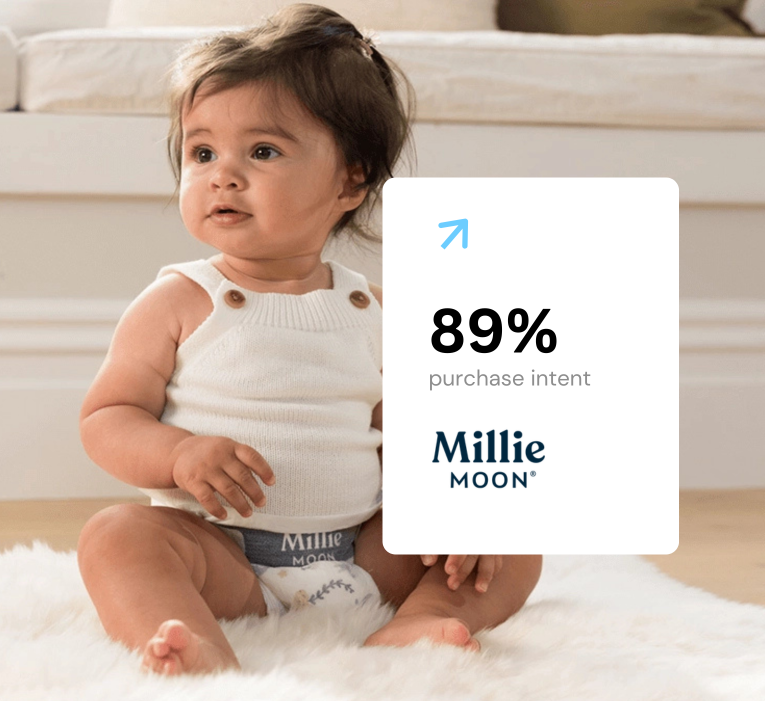
89%
purchase intent
15,457
reviews
51,194
approved marketing opt-ins
$0.49
CPL
About the campaign
Millie Moon is Zuru's premium diaper brand, sold to parents who want a softer, higher-quality product than the mass-market names. The brand ran a US sampling campaign with three jobs to do. Gather reviews it could syndicate through Bazaarvoice, grow first-party data for its CRM programme, and reach the right consumers to build brand awareness.
.
The challenge
A premium diaper lives or dies on whether parents believe it is worth the extra money. That belief comes from two things, real reviews on the pages where parents shop, and parents who have felt the product against their baby's skin. Millie Moon had the product. What it needed was proof, and a way to capture the people who tried it.
Reviews were the first job. Retail product pages without a strong base of recent, detailed reviews give a premium brand nothing to stand on next to the big mass-market names. The brand wanted quality and volume, and it wanted those reviews syndicated to the pages where parents decide.
The second job was data. A CRM programme is only as good as the people in it. Millie Moon wanted consented, first-party data on real parents and expectant parents, captured cleanly and ready to use.
The third was reach. Awareness is cheap to buy and easy to waste. The brand wanted its samples in the hands of people who genuinely have a baby on the way or in the house, so every sample and every follow-up landed with someone who could become a customer.
.
The approach
Sample requests were driven through Meta ads, the Millie Moon website and organic posts on Instagram. These were the channels that reached parents at the moment they were thinking about diapers.
The work that made the campaign relevant happened at the point of request. Before anyone could claim a sample, they selected their child's size and confirmed they either had a child or were expecting. That single step kept the audience tight, with SamplMatch ensuring samples went only to households that fit the brand's criteria.
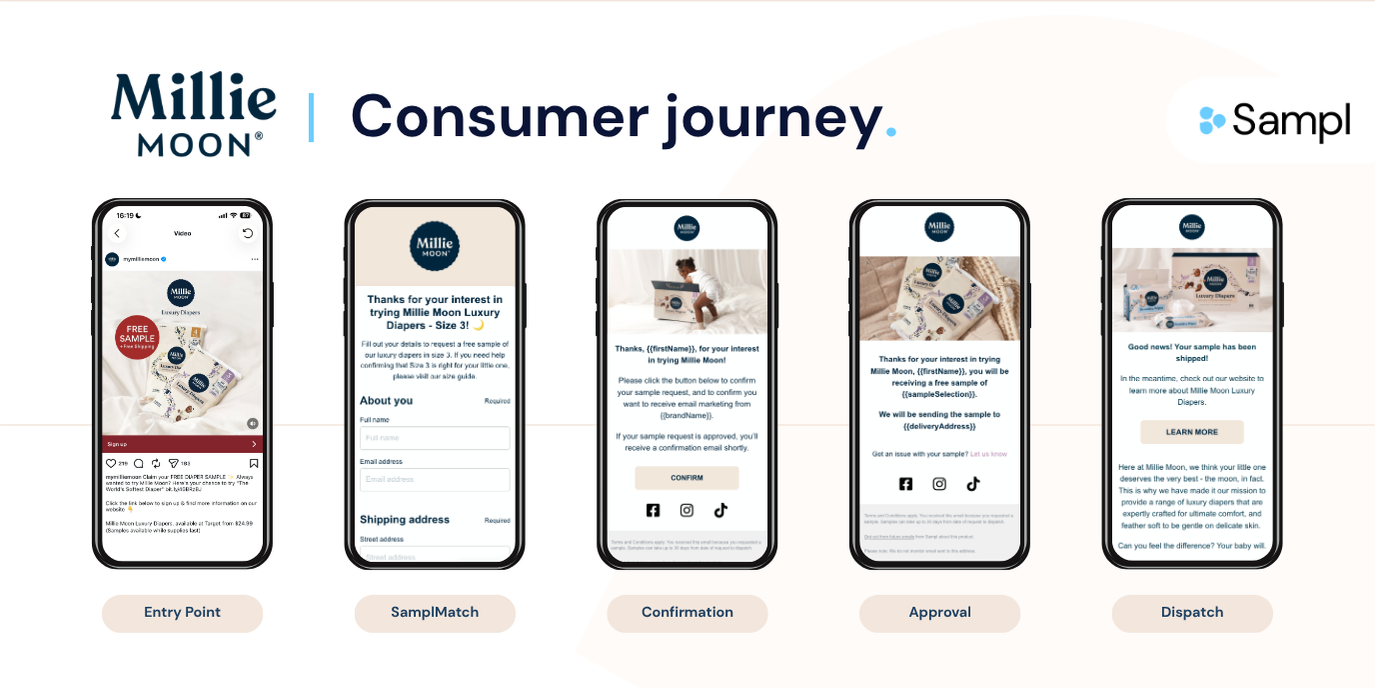
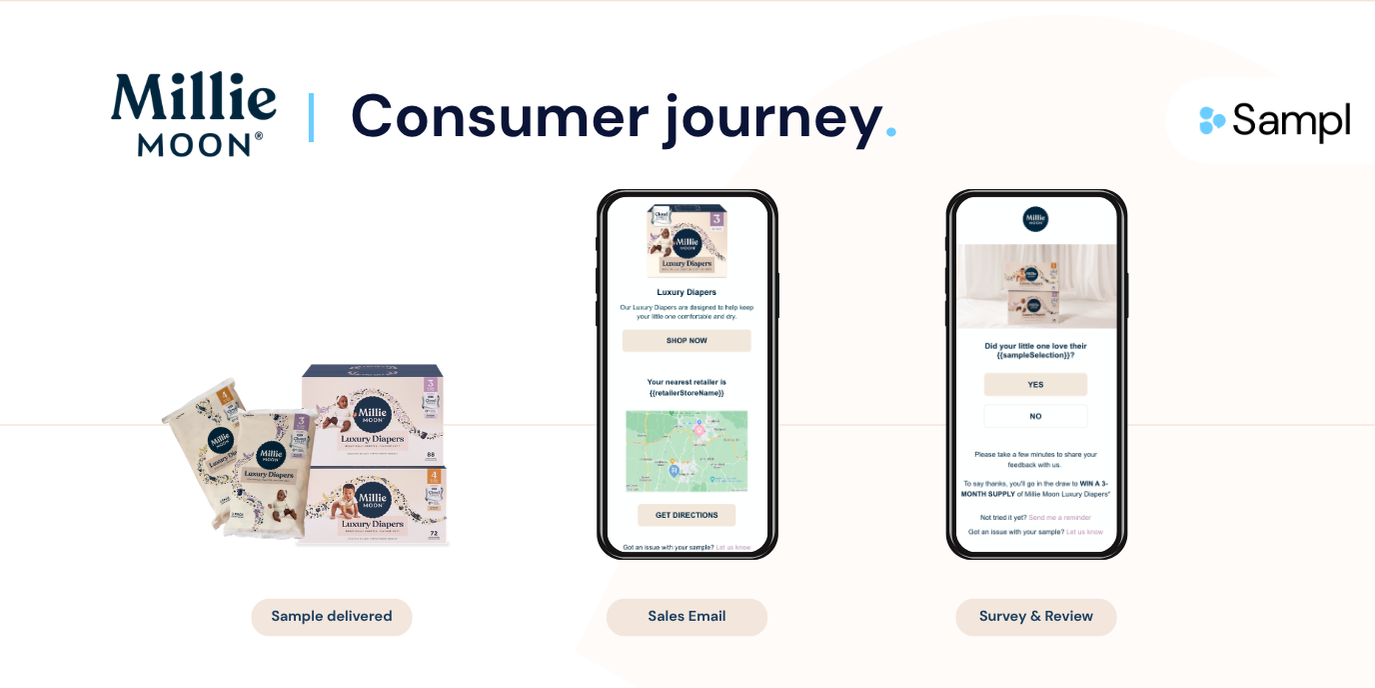
From there the journey did several jobs at once. It captured and confirmed each opt-in, delivered the sample, then after delivery sent a sales email pointing each parent to their nearest Target. 17 days on, a survey and review asked whether the baby liked the product and captured a star rating and written feedback.
.
Execution
→ A paid social ad invited parents to claim a free Millie Moon sample
→ SamplMatch took the request, with the parent selecting their child's diaper size and confirming they had a baby or were expecting
→ A confirmation step captured a double opt-in, the sample request and consent to marketing, fed into Klaviyo
→ Approved parents received approval and dispatch emails, then the sample
→ After delivery, a sales email pointed each parent to their nearest stockist with directions
→ 17 days on, a survey and review asked whether the baby liked the product and captured a star rating and written feedback
→ Reviews were syndicated to retail product pages through Bazaarvoice
.
Results
89% purchase intent.
After trying the sample, 89% of parents said they intended to buy Millie Moon. For a premium product competing on price as well as quality, that is the number that tells the brand trial is converting belief into intent.
51,194 approved marketing opt-ins at a $0.49 CPL.
The campaign captured 51,194 approved, double opt-in records of real parents and expectant parents, delivered straight into Klaviyo at a cost per lead of 49 cents. That CPL reads even better in context. 74% of the parents reached had never bought Millie Moon, so the brand was paying 49 cents a record to build a consented audience of people it still had to win.
15,457 reviews, 10,180 syndicated.
Parents left 15,457 reviews, averaging 4.79 stars, with 10,180 of them syndicated to retail product pages through Bazaarvoice. That is a standing base of fresh, detailed social proof on the pages where the next parent decides what to buy.
74% new to the brand.
74% of the parents who tried the sample had not bought Millie Moon before. The campaign was spending its samples on parents the brand had yet to win, which is what an awareness campaign should do.
Alongside the headline numbers, the post-trial survey handed the brand a clear read on where its trialists shop and how they rate Millie Moon against the diaper they currently use. That is fuel for the next round of media, retail and CRM decisions, all from first-party data the brand now owns.
.
What the campaign proves
→ Qualifying at the point of request keeps samples and data tight to the people who matter
→ One campaign can deliver reviews, first-party data and awareness without trading one off against the others
→ A premium brand can build a syndicated review base fast, on the pages where parents actually shop
→ A consented CRM audience of mostly net-new parents can be built at $0.49 a record, a CPL that competes with any channel
→ Trial turned curiosity into intent, with 89% of parents wanting to buy after feeling the product for themselves
Let's talk
If you're facing similar questions around who your samples reach, how trial translates into intent, or how to generate insight retailers can trust, we're always happy to share how this approach works in practice and where it tends to deliver the most value.
No items found.
Never miss a case study. Get the latest industry insights direct to your inbox.
Other success stories
Fragrance

How Moschino made their Toy 2 fragrance launch a success in Superdrug
Moschino used Sampl’s exclusive Superdrug partnership to get their new Toy 2 scents into the hands of fragrance buyers found through Superdrug’s own data, and saw Gummy and Yummy sales rise 108%
Household

How Dylon drove 91% purchase intent among new-to-brand gym-goers
Dylon's Sport Detergent campaign shows how targeted sampling can introduce a new product to an audience who didn't know it existed, and turn trial into measurable purchase intent.
Fragrance

How Cartier turned fragrance sampling into 71% purchase intent
Cartier’s La Panthère campaign shows how targeted sampling can support retail conversations by reaching the right buyers and capturing meaningful feedback.

Sampl delivers highly-targeted and personalised digital product sampling experiences for brands to drive engagement with the right audiences.
.svg.svg)


